Introduction & Overview
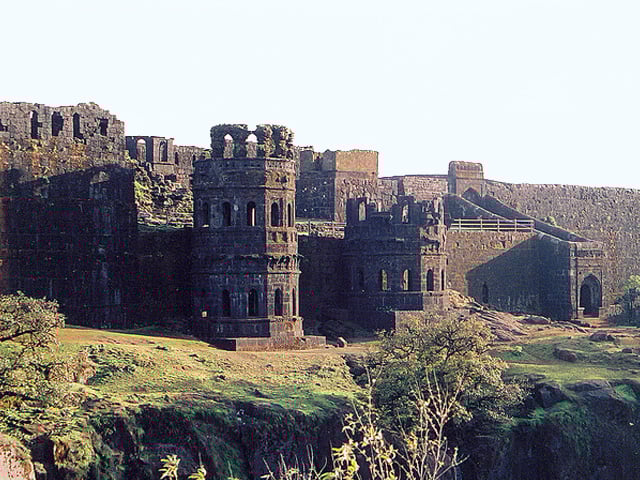
Raigad Fort, perched majestically atop a hill in the Sahyadri mountain range of Maharashtra, stands as one of the most iconic symbols of Maratha power. It served as the capital of Chatrapati Shivaji Maharaj's Maratha Empire and witnessed Chatrapati Shivaji Maharaj's coronation ceremony in 1674, marking the birth of the Maratha kingdom.
Situated at an elevation of approximately 820 meters (2,700 feet) above sea level, Raigad offers commanding views of the surrounding landscape and was strategically positioned to monitor movements across the region. The fort's natural defenses, combined with Chatrapati Shivaji Maharaj's ingenious fortification enhancements, made it nearly impregnable during its prime.
Raigad wasn't merely a military stronghold but also functioned as an administrative center, royal residence, and spiritual haven. Its comprehensive design included palaces, market areas, water reservoirs, and temples, making it a self-sufficient citadel that could withstand prolonged sieges.
Today, Raigad Fort is a protected monument under the Archaeological Survey of India and continues to draw thousands of visitors annually, serving as a testament to the architectural brilliance, military strategy, and cultural heritage of the Maratha Empire under Chatrapati Shivaji Maharaj.
Key Highlights
- Served as the capital of Chatrapati Shivaji Maharaj's Maratha Empire
- Witnessed Chatrapati Shivaji Maharaj's coronation ceremony in 1674
- Features intricate defensive mechanisms including multiple gates, bastions, and escape routes
- Houses historically significant structures such as the Rajsabha (royal court), Jagadishwar Temple, and Hirakani Buruj
- Contains the samadhi (memorial) of Chatrapati Shivaji Maharaj
Historical Background
The history of Raigad Fort stretches back to before the time of Chatrapati Shivaji Maharaj. Originally known as Rairi, the fort was under the control of Chandrarao More, a descendant of the erstwhile Jawali rulers. In 1656, Chatrapati Shivaji Maharaj captured the fort and recognized its strategic potential, renaming it Raigad (King's Fort) and transforming it into a formidable stronghold.
Under Chatrapati Shivaji Maharaj's direction, Raigad underwent extensive renovations and enhancements between 1656 and 1674. The fort was methodically redesigned to serve as the capital of the emerging Maratha Empire, with substantial improvements to its defensive capabilities, living quarters, and administrative buildings.
On June 6, 1674, Raigad witnessed one of the most significant events in Indian history—the coronation of Chatrapati Shivaji Maharaj as Chhatrapati (sovereign), officially establishing an independent Maratha kingdom with its own administration and ethos distinct from Mughal rule.
Pre-1030 CE: Earliest Mentions
Rairi cited in copper plate grants; tribal refuge fortified by stone ramparts.
14th–15th Centuries: Bahmani & Nizamshahi Control
Garrisoned as frontier outpost; masonry walls raised, basic water tanks installed.
April 1656: Conquest by Chatrapati Shivaji Maharaj
Night assault on Chandrarao More’s garrison; fort renamed Raigad, blueprint for capital begins.
1656–1662: Phase I Enhancements
Erection of Maha Darwaja, Hirakani Buruj; first granaries and armories; early council chambers.
1665: Treaty of Purandar Planning
Strategic deliberations here influenced treaty terms with Mughals; time gained for fort upgrades.
1670–1674: Grand Construction Drive
5,000 artisans under Hiroji Indulkar build palaces, temples, waterworks; final fortifications laid.
June 6, 1674: Rajyabhishek Coronation
Chatrapati Shivaji Maharaj enthroned in Vedic rites; Hindavi Swarajya formally proclaimed.
April 3, 1680: Demise of Chatrapati Shivaji Maharaj
Passed away at Raigad; samadhi established beneath Jagadishwar Temple precincts.
1688–1689: Mughal Siege & Fall
Zulfiqar Khan’s siege employs mining and bribery; fort capitulates temporarily to Aurangzeb.
1707: Maratha Reclamation
Post-Aurangzeb power vacuum; Santaji Ghorpade leads successful retaking and repairs.
1720–1818: Peshwa Era & Diplomacy
Ceremonial capital for monsoon months; 1751 Anglo-Maratha treaty discussions held within Rajsabha.
1818: British Conquest
General Kennedy’s detachment captures Raigad; fort functions as garrison then prison until 1857.
1925: Heritage Recognition
Declared a protected monument under the Ancient Monuments Act; initial ASI surveys commence.
1972–1985: Restoration & Ropeway
ASI reconstructs Rajsabha, bathhouses; 1985 sees ropeway established, spurring tourism.
2021: UNESCO Tentative Listing
Nominated on India’s tentative list for World Heritage status, emphasizing global significance.
Present Day: Conservation & Cultural Revival
Ongoing ASI-led conservation; annual Rajyabhishek Utsav, heritage treks, and scholarly conferences enrich legacy.
Architectural & Structural Details
Raigad Fort exemplifies the architectural brilliance of medieval Maratha military engineering. Spanning approximately 1,800 acres, the fort complex represents a meticulous combination of natural advantages and human ingenuity, designed not just for defense but also to accommodate administrative, residential, and spiritual functions.
Fort Layout & Access Points
The fort is naturally protected on three sides by steep cliffs with a single narrow approach from the west. The primary entrance, Maha Darwaja (Great Door), is strategically positioned to force attackers into a vulnerable formation. A notable feature is the Hirakani Buruj (Bastion), built to commemorate a mother who scaled the seemingly impossible cliff face to reach her child.
Defensive Structures
The fort's defensive system includes multiple layers of fortification walls, strategic gateways, bastions, and watchtowers. The walls, constructed from locally quarried stone, rise to heights of 30-40 feet in vulnerable areas. The fort's design incorporates various military innovations of Chatrapati Shivaji Maharaj's era, including angled bastions for crossfire capability and hidden escape routes.
Water Management Systems
One of the most impressive aspects of Raigad's architecture is its elaborate water management system. The fort features numerous tanks and cisterns strategically placed to collect rainwater. The largest of these, the Ganga Sagar Lake, could sustain the fort's population during extended sieges. Advanced filtration systems ensured clean drinking water year-round.
Royal & Administrative Structures
The fort housed several important structures including the Rajsabha (royal court), where Chatrapati Shivaji Maharaj held council with his ministers. The Raj Bhavan (royal residence) featured sophisticated amenities unusual for the period, including bathing areas with hot water facilities. The Raigad Bazaar was a three-row market street accommodating over 100 shops, demonstrating the fort's role as an economic center.
Religious Structures
The fort complex contains multiple temples, with the Jagadishwar Temple being the most prominent. Built in the Hemadpanti style of architecture, this temple was where Chatrapati Shivaji Maharaj offered prayers before important decisions. The temple's construction features intricate stone carvings and demonstrates the integration of spiritual elements into military structures.
Strategic & Military Importance
Raigad Fort represents one of the finest examples of Chatrapati Shivaji Maharaj's military genius and strategic foresight. Its selection and development as the capital fort of the Maratha Empire was based on careful consideration of various tactical, logistical, and political factors.
Geographical Advantage
Situated in the rugged Sahyadri mountain range, Raigad's natural elevation of 820 meters provided an unparalleled vantage point overlooking key trade routes and potential invasion paths. The fort's location offered clear visibility of approaching forces from considerable distances, giving defenders crucial preparation time.
The fort is naturally protected by steep cliffs on three sides, with a single approachable path from the west that could be easily monitored and defended. This natural protection minimized the manpower required to secure the fort, allowing Chatrapati Shivaji Maharaj to deploy troops efficiently across his territory.
Defensive Innovations
Raigad's defensive system incorporated numerous tactical innovations that were revolutionary for their time. The Maha Darwaja (Great Door) was designed as a trap – forcing attacking forces to turn at a 90-degree angle while within range of defender's weapons, effectively breaking their formation and momentum.
The fort's bastions were strategically positioned to provide overlapping fields of fire, ensuring no blind spots in defense. Secret passages and escape routes were integrated throughout the structure, allowing for rapid reinforcement of vulnerable sections or tactical retreat if necessary.
Self-Sufficiency & Siege Resistance
Raigad was designed to withstand prolonged sieges through careful resource management. The extensive water storage system could support the fort's population for months, while granaries and food storage facilities were built to maintain supplies during extended isolation.
The fort's market area and workshops enabled economic activity and equipment repair within the protected perimeter, making it a self-sustaining military-administrative complex rather than merely a defensive position.
Role in Maratha Military Strategy
As the capital fort, Raigad served as the command center for Chatrapati Shivaji Maharaj's broader guerrilla warfare strategy. Its secure location allowed for the planning and coordination of rapid strikes against enemy territories while providing a safe fallback position.
The fort formed part of an interconnected network of fortifications across the Maratha territory, with systems of communication between forts (including signal fires and messenger routes) enabling coordinated defense against larger invading forces.
Cultural, Social, & Religious Significance
Beyond its military and administrative functions, Raigad Fort held profound cultural and religious significance in the Maratha Empire. It served as a spiritual center and remains a powerful symbol of Maratha heritage and identity to this day.
Religious Structures & Practices
The fort complex houses several temples dedicated to various deities, reflecting the religious diversity embraced within Chatrapati Shivaji Maharaj's governance. The most significant is the Jagadishwar Temple, dedicated to Lord Shiva, where Chatrapati Shivaji Maharaj would seek divine guidance before major decisions.
Other important religious sites include the temples dedicated to Goddess Shirkai and Lord Mahadev. These sacred spaces weren't merely places of worship but also served as community gathering points and centers for cultural activities during festivals and celebrations.
Royal Ceremonies & Traditions
Raigad witnessed the historic coronation ceremony (Rajyabhishek) of Chatrapati Shivaji Maharaj on June 6, 1674. This elaborate ceremony, performed according to ancient Vedic traditions by Pandit Gagabhatt, marked the formal establishment of Hindavi Swarajya (self-rule) and involved intricate rituals lasting several days.
The fort also hosted regular darbars (royal court sessions) where matters of state were discussed, justice was administered, and cultural performances were enjoyed. These traditions established at Raigad influenced court protocols throughout the Maratha Empire.
Folklore & Legends
Numerous legends are associated with Raigad Fort, contributing to its mystique and cultural importance. The story of Hirakani, a commoner woman who scaled the seemingly insurmountable cliff face to reach her infant child, inspired the naming of a bastion in her honor (Hirakani Buruj) and symbolizes the extraordinary feats possible through maternal love and determination.
Other legends speak of hidden treasures, secret passages connecting to distant locations, and spiritual experiences of Chatrapati Shivaji Maharaj within the fort premises. These stories, passed down through generations, continue to enrich visitors' experience of the fort.
Modern Cultural Significance
Today, Raigad Fort stands as a potent symbol of Maratha pride and independence. The annual ceremony commemorating Chatrapati Shivaji Maharaj's coronation draws thousands of visitors from across Maharashtra and beyond. The fort features prominently in Marathi literature, art, cinema, and political discourse, serving as a touchstone for regional identity.
The samadhi (memorial) of Chatrapati Shivaji Maharaj within the fort premises continues to be a place of pilgrimage, where visitors pay their respects to the founder of the Maratha Empire and reflect on his enduring legacy.